
Services · MEP Design
District Heating Network Design
Heat network designs tailored to your development: efficient, reliable and sustainable heat delivered from a central source to every home.
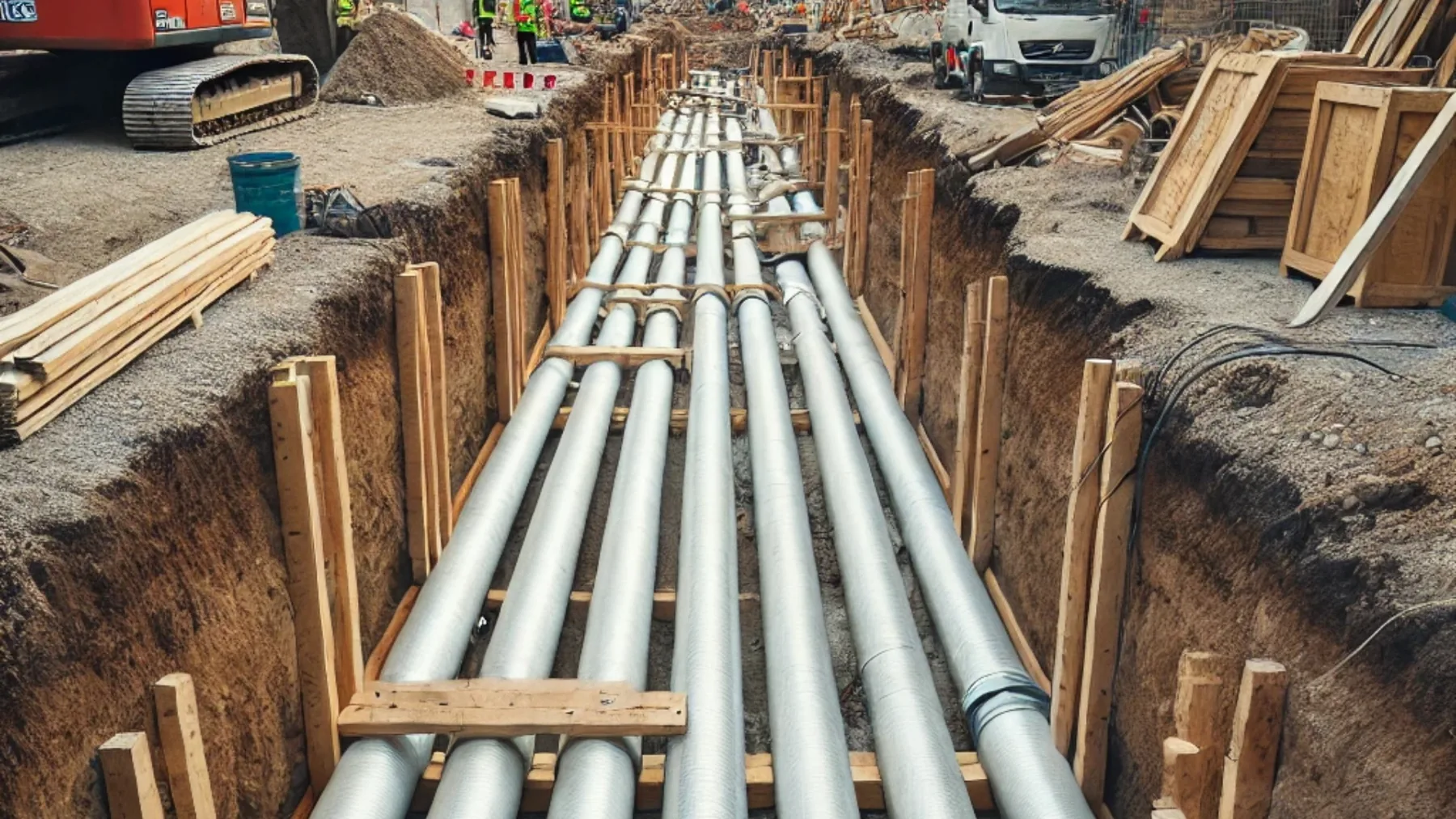
District heating networks distribute heat generated at a centralised location to multiple buildings, typically as hot water through a network of pre-insulated pipes. These systems can draw on a range of heat sources, including renewable energy, waste heat and combined heat and power (CHP) plants. AMF MEP tailors every network design to the specific needs of your community, providing an efficient, reliable and sustainable heating solution.
Our current workload shows the full span of heat network engineering. At Selby Urban Village in Tottenham we are developing the district heat network connection and HIU strategy for 202 low-carbon homes, while at Uxbridge Town Centre West a site-wide communal network serves heat interface units in all 267 apartments. Where a local network is still coming forward, as at 3 Thames Road in the Royal Docks, we design the communal heating so it is ready to connect the day the network arrives.
What we deliver
Discuss your project →- Network routing and pre-insulated pipework design
- Heat source appraisal covering renewables, waste heat and CHP
- Thermal store sizing and integration with the distribution strategy
- Heat interface unit (HIU) strategy and specification
- Connection design to existing and planned district heat networks
- Heat metering strategy for communal systems
- MEP planning-condition discharge for heat network commitments
Proof
Where we deliver this now.
Selby Urban Village
202 homes across four plots in Tottenham connected to the local low-carbon district heat network, with AMF developing the connection and HIU strategy.
Uxbridge Town Centre West
Site-wide communal heat network with heat interface units serving all 267 apartments.
3 Thames Road
Communal heating for 161 homes designed for future connection to the Royal Docks heat network.
What is a district heating network and how does it work?
A district heating network distributes heat generated at a centralised location to multiple buildings, typically as hot water through a network of pre-insulated pipes. Heat interface units (HIUs) in each dwelling then transfer that heat into the home's own heating and hot water systems. The central source can be renewable energy, waste heat or a combined heat and power plant.
Can a new development connect to an existing or planned heat network?
Yes, and we design for both cases. At Selby Urban Village, 202 homes connect to the local low-carbon district heat network in Tottenham. At 3 Thames Road, where the Royal Docks network is still coming forward, we designed the communal heating for 161 homes so it is ready for future connection.
Why choose district heating for a residential scheme?
District heating concentrates heat generation in one place, which makes the system efficient to run and lets the whole development move to lower-carbon sources over time. It can draw on renewable energy, waste heat and CHP, and it supports planning-level carbon commitments: at Selby Urban Village the heat network connection contributes to a 91% regulated-carbon saving against Part L 2021.
Need district heating network design?
Tell us about your development and we will show you how it fits.
Start a project →